
Why Breakrooms Fail
An empty breakroom usually signals a design problem, not employee behavior. Here’s what causes disengagement and how workplaces improve usage.

Introduction: The Quiet Breakroom Problem
Many organizations invest in a breakroom expecting it to become a gathering space. Instead, employees continue leaving the building or avoiding it entirely.
When this happens, it’s rarely because employees don’t want a break, it’s because the environment doesn’t support how they actually work.
A breakroom is successful only when it fits behavior patterns, not just space availability.
Why Employees Avoid the Breakroom
1. Inconvenient Layout
If accessing refreshments requires extra effort, employees default to faster alternatives.
Common issues include:
- poor placement
- congestion during peak times
- limited accessibility during shifts
Convenience determines usage more than availability.
2. Predictability Problems
Employees stop relying on a space when they cannot depend on it.
This includes:
- empty machines
- inconsistent options
- equipment downtime
Once reliability drops, people change habits permanently.
3. Limited Variety
Different schedules and roles create different needs.
A single offering rarely supports:
- early shift workers
- late shift workers
- active roles
- desk-based roles
When employees feel the space wasn’t designed for them, they stop visiting.
4. Flow Disruption
Breakrooms fail when they interrupt workflow rather than support it.
If employees must walk far, wait, or leave a work zone, they often choose external options instead.
What Successful Breakrooms Do Differently
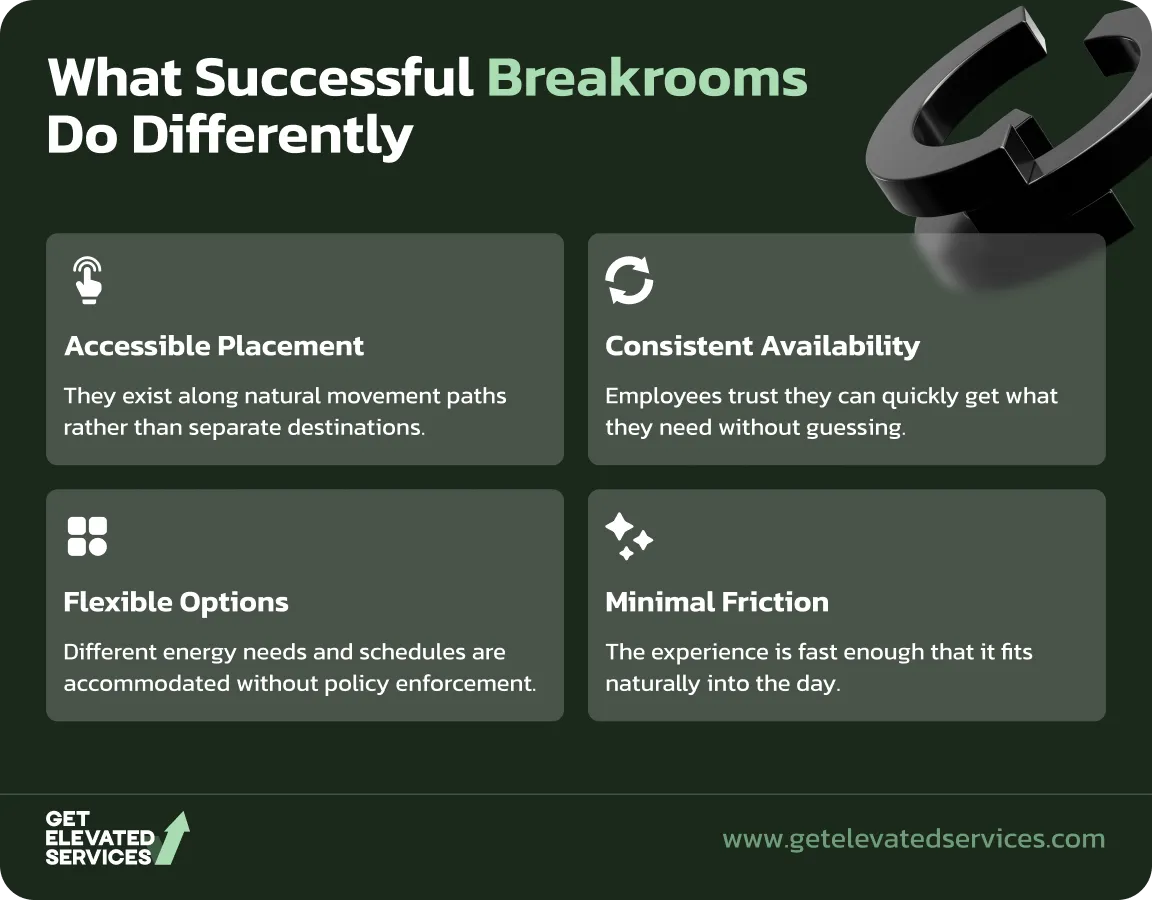
Accessible Placement
They exist along natural movement paths rather than separate destinations.
Consistent Availability
Employees trust they can quickly get what they need without guessing.
Flexible Options
Different energy needs and schedules are accommodated without requiring policy enforcement.
Minimal Friction
The experience is fast enough that it fits naturally into the day.
The Behavior Factor
Breakroom success is not determined by equipment quality, it’s determined by behavioral alignment.
Employees use spaces that:
- save time
- reduce effort
- feel reliable
- match routines
When these factors are missing, the breakroom becomes decorative instead of functional.
Signs a Breakroom Needs Improvement
Organizations often notice:
- employees leaving site regularly
- low usage despite investment
- uneven traffic patterns
- complaints about availability
- long breaks for simple purchases
These indicate the space does not match daily workflows.
How Workplaces Improve Engagement
Successful updates typically involve redesigning the experience rather than adding more products.
Changes often focus on:
- placement adjustments
- accessibility improvements
- consistency of service
- aligning with work schedules
Small structural improvements frequently change behavior quickly.
Conclusion
Employees don’t avoid breakrooms because they dislike them, they avoid environments that don’t support convenience and reliability.
When refreshment spaces align with real workflow patterns, usage increases naturally without requiring policies or reminders.


Other Blog Posts you Might Like

How Workplace Amenities Influence Employee Satisfaction


Why Workplace Breaks Are Getting Longer (And What Companies Can Do About It)

The Hidden Cost of Workplace Friction (And How to Reduce It)
Let’s Elevate Your Business
Whether you’re upgrading your breakroom, optimizing your vending program, or exploring new solutions - our team is here to help. Let’s connect and explore how GES can elevate your service experience.

.png)