
The Hidden Cost of Workplace Friction (And How to Reduce It)
Workplace friction quietly impacts morale, productivity, and retention. Here’s how small inefficiencies compound over time.

Introduction: Friction Rarely Looks Dramatic
Most operational leaders focus on large-scale inefficiencies:
- supply chain delays
- staffing shortages
- system outages
But workplace friction often begins at a smaller level.
Small daily inconveniences accumulate silently, and over time, they influence productivity and culture more than expected.
What Is Workplace Friction?
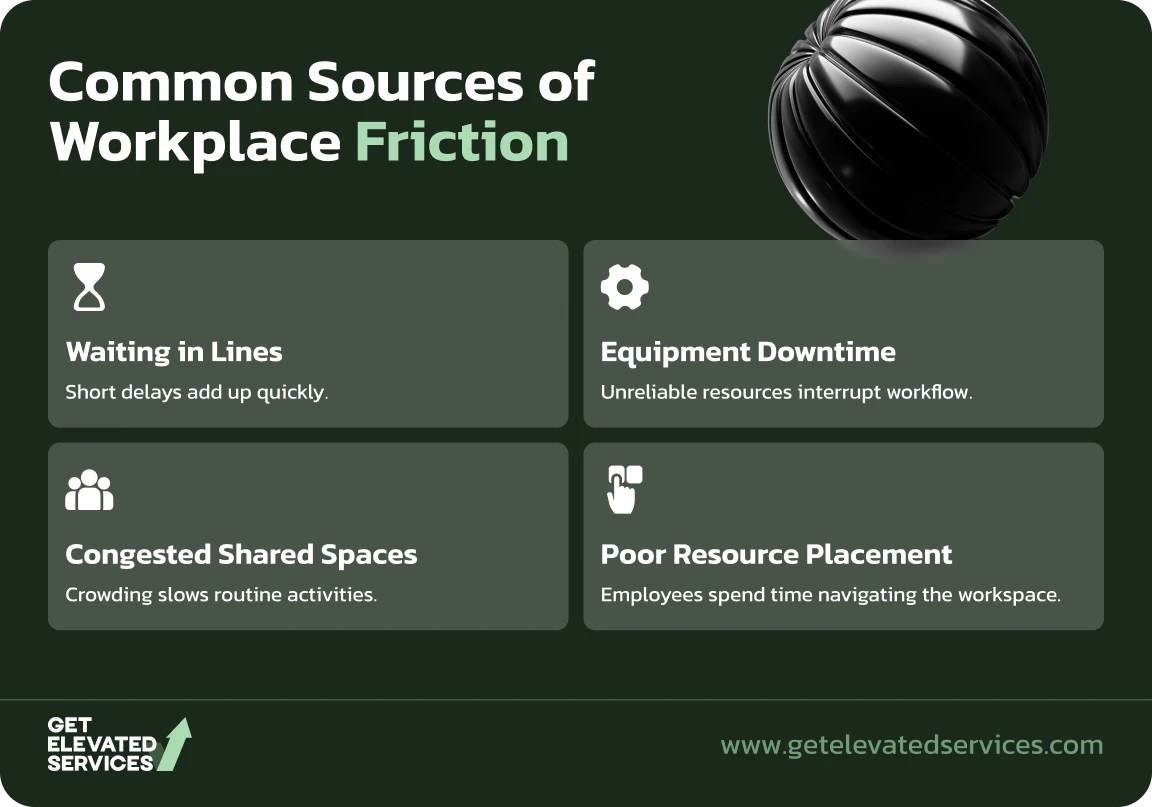
Workplace friction refers to small, repeated disruptions that interrupt workflow.
Examples include:
- waiting in line for refreshments
- leaving the building for basic needs
- inconsistent equipment reliability
- congestion in shared spaces
- unclear resource placement
Individually minor. Collectively influential.
The Compounding Effect
If one employee extends a break by 5 minutes, it feels negligible.
If 100 employees do this daily, the impact compounds significantly.
Friction spreads through:
- workflow gaps
- delayed meetings
- reduced energy
- disrupted collaboration
The cost is often behavioral, not financial, but it becomes operational.
How Environment Drives Friction
Employees respond to the path of least resistance.
If accessing basic needs requires effort, they adjust their routines accordingly.
Convenience influences:
- break duration
- on-site retention
- team synchronization
- perceived workplace efficiency
Environment quietly directs behavior.
The Productivity Link
Reduced friction supports:
- shorter break cycles
- predictable workflow
- smoother shift transitions
- improved focus
Organizations that optimize convenience often notice improved consistency without policy changes.
Cultural Impact
Workplace environment sends signals.
When spaces feel:
- outdated
- inconsistent
- unreliable
It subtly shapes employee perception of organizational standards.
Conversely, well-maintained environments reinforce stability and attentiveness.
Identifying Friction Points
Operational leaders can assess friction by asking:
- Where do employees cluster unnecessarily?
- When do workflow delays consistently occur?
- What daily complaints repeat?
- Which spaces feel underutilized?
Patterns reveal friction zones.
Reducing Workplace Friction
Improvements often involve:
- strategic space planning
- consistent equipment reliability
- improved placement flow
- predictable service cadence
- alignment with employee demand
The goal is to remove minor obstacles before they compound.
Conclusion
Workplace friction rarely appears urgent, but over time it shapes productivity, morale, and retention.
Organizations that intentionally reduce friction create smoother workflow without increasing oversight.
Small environmental improvements often generate disproportionate operational benefit.


Other Blog Posts you Might Like

How Workplace Amenities Influence Employee Satisfaction


Why Workplace Breaks Are Getting Longer (And What Companies Can Do About It)
The Hidden Cost of Workplace Friction (And How to Reduce It)
Let’s Elevate Your Business
Whether you’re upgrading your breakroom, optimizing your vending program, or exploring new solutions - our team is here to help. Let’s connect and explore how GES can elevate your service experience.

.png)